

At Tokyo Boeki Techno-System, our mission is to eliminate defects. By using a QMS, we help reduce defective products, lower costs related to recalls and returns, improve customer satisfaction, and protect corporate reputation.
SEARCH BY PRODUCTS & FORMAT
-
ATS Inspect
-
ATS CM4D
-
ATS Bus
Why Is Quality Management Important?
A decline in the quality of products or services directly damages a company’s reputation, and once lost, trust is difficult to regain. To continue providing products and services, it is essential to maintain consistent quality and build long-term trust.
In many manufacturing sites, quality depends heavily on experienced employees. When these employees leave, quality can decline. A Quality Management System helps standardize processes and rules, ensuring stable quality even when personnel change.
Challenges in Quality Management in Manufacturing
While quality management is used across many industries, manufacturing has its own unique challenges. Below are three key issues commonly faced in manufacturing.
Difficulty in Sharing Data
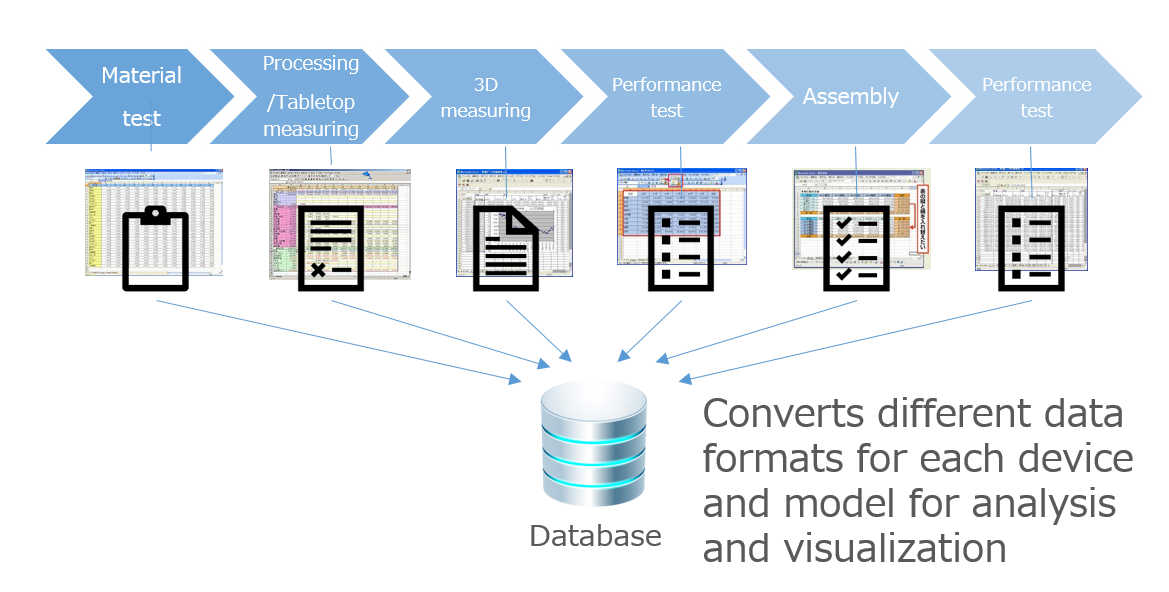
In manufacturing, data is often separated by processes or departments, making collaboration difficult. When data is stored on paper or in individual Excel files, it cannot be easily shared or edited.
As a result, important information such as production status, customer needs, and quality levels may not reach the right teams, which can lead to quality issues.
Reliance on Experience and Individual Knowledge
In many manufacturing sites, know-how is concentrated in experienced employees, making knowledge transfer to younger staff difficult. When expertise depends on specific individuals, problems may arise if those employees are absent, leading to operational risks.
Lack of Standardized Work Processes
When work is not standardized and skills are concentrated in experienced employees, product quality depends on individual ability. To maintain consistent quality during absences or after staff turnover, it is essential to transfer skills regularly and standardize work processes.
How to Achieve Quality Management
Next, let’s look at what is specifically needed to achieve effective quality management.
Introducing the Seven QC Tools
QC stands for Quality Control. The Seven QC Tools are essential methods for collecting, organizing, and analyzing quality-related data. They include the Pareto chart, cause-and-effect diagram, graphs, histograms, scatter diagrams, control charts, and check sheets. These tools are used to analyze numerical data objectively, visualize issues, and support continuous improvement.
Implementing PDCA
PDCA is a continuous improvement method that repeats four steps: Plan, Do, Check, and Act.
By cycling through these steps, organizations steadily improve performance, build know-how, and achieve ongoing improvement.
Implementation of a Quality Management System
Implementing a quality management system means centrally managing quality data digitally instead of using paper documents or Excel files. It helps visualize quality issues, identify problems more easily, and reduce operational workload, making it essential for efficient quality management.
As many different quality management systems are available, it is important to clearly define your objectives and select a system that best fits your company’s needs.
How a Quality Management System (QMS) Works
A Quality Management System, abbreviated as QMS (Quality Management System), is a system designed to improve quality through centralized data management and analysis. Here, we explain its key functions and structure.
Functions and Structure of a Quality Management System
A quality management system typically includes the following functions.
- Data collection: Collects and stores data from inspection equipment
- Inspection instructions: Registers inspection sample information and issues inspection requests
- Standard judgment: Checks whether inspection results meet standards and determines pass/fail and shipment
- Statistical analysis: Analyzes trends in the production process
- Shipment instructions: Registers shipment information and accepts shipment requests
- System integration: Connects with external systems to obtain information
In addition, a quality management system includes a mechanism for continuous quality improvement. For example, when a customer complaint is received, the cause is identified and corrective actions are taken. Rather than fixing only one issue, related areas are also reviewed. By repeating the PDCA cycle—Plan, Do, Check, and Action—organizations continuously improve and verify processes to achieve better quality.
What Is a Management System?
A management system is a framework that defines policies and goals and manages an organization to achieve them. In QMS, it refers to managing quality in a structured and systematic way.
The goal of a management system is to deliver products and services that meet customer and partner expectations, with clear involvement from management and leadership.
In addition to QMS, there are other systems such as Occupational Health and Safety Management Systems (OHSMS) and Environmental Management Systems (EMS). Multiple systems may also be used together.
Purpose of Implementing a Quality Management System
The main purposes of implementing a quality management system include the following.
- Produce high-quality and reliable products
- Eliminate reliance on individuals and maintain consistent product quality
- Reduce defects
- Reduce waste in manufacturing to lower costs and improve productivity
- Ensure legal and regulatory compliance
At Tokyo Boeki Techno-System, our mission is to eliminate defects. We provide solutions that enable equipment data collection and visualization, preventive maintenance, and real-time visibility of quality.
Benefits of Implementing a Quality Management System
What benefits can be gained from implementing a quality management system? Below are some key advantages.
Improved Visibility of Quality
With a quality management system, organizations continuously review and improve operations through the PDCA cycle. As data is collected and analyzed, OK/NG quality status becomes visible, enabling better control of defects within the process. This data may include defect records and test or inspection data.
While quality standards vary by company and site, it is important not only to visualize quality but also to analyze the data and use it for improvement. Proper labeling and data linkage to subsequent processes are also essential.
Easier Data Management
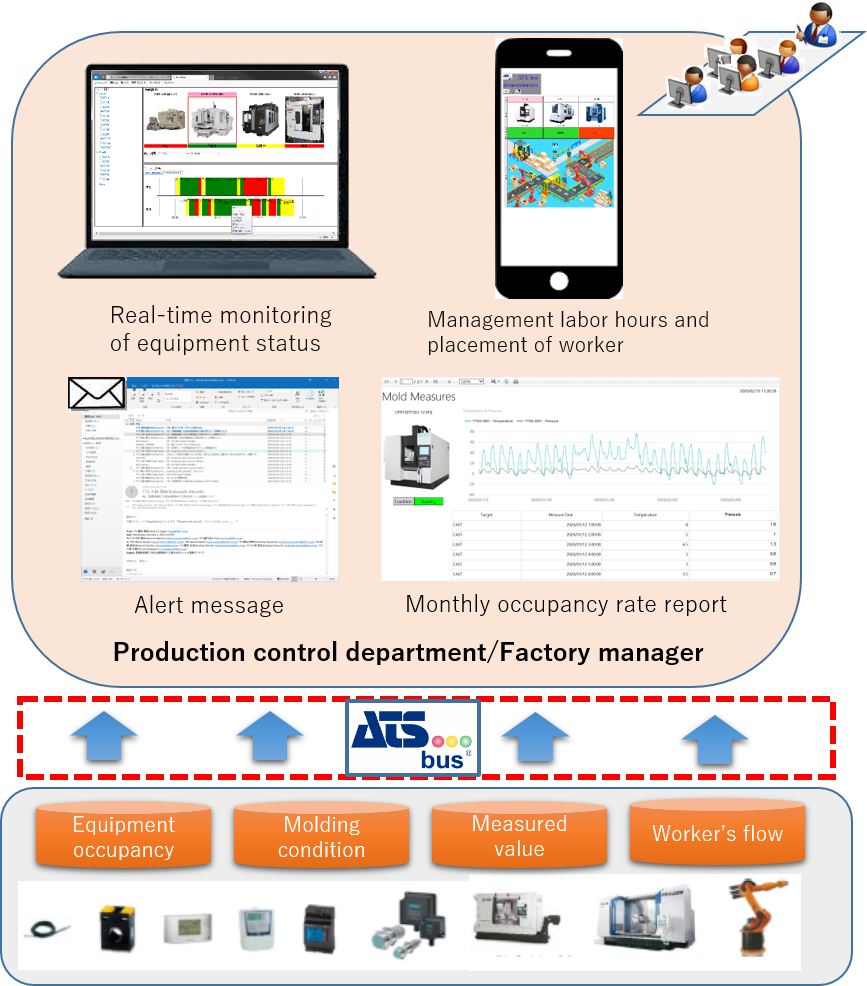
A quality management system manages and visualizes equipment and measurement data on a single platform. Centralized data makes cross‑department collaboration easier and allows quick access to information. This enables fast responses to customer inquiries and complaints.
Some systems also provide alerts before issues occur in the production process and automatically generate inspection reports, helping reduce workload and labor costs. In addition, secure data management helps prevent tampering and supports product quality and corporate credibility.
How to Choose a Quality Management System
Quality management systems vary in features and are offered by many providers. Here, we explain key points to consider when selecting the right system for your needs.
Does the System Support What You Need to Manage?
Quality management systems differ in what they can manage. First, check whether the system supports the data you need for quality control, such as production line management or equipment data collection.
Is the System Easy to Implement and Use?
It is important to confirm that the system is easy for on-site staff to use. Even with many features, a system that does not fit actual operations will not improve efficiency. Ease of implementation is also a key factor. Choose a system that can be smoothly integrated into daily workflows and is simple to operate to improve productivity.
Does the System Offer the Functions You Need?
The functions included vary by system. Some systems focus on specific tasks, such as inspection or inventory management, while others support a wider range of functions, including data linkage and automatic report generation.
More features are not always better. Advanced systems tend to be more expensive and may be more complex to use. Carefully check that the system includes the functions your organization truly needs.
Quality Management Standards (Reference)
Quality management is guided by several established standards. Below are three widely recognized examples.
ISO 9001
ISO 9001 is an international standard for quality management systems. It is used by organizations worldwide to ensure consistent product and service quality.
The standard focuses on meeting customer requirements and improving customer satisfaction. ISO 9001 certification is often required in business and helps build trust with customers and partners.
JIS
JIS is a set of standards established in Japan. JIS stands for Japanese Industrial Standards.
Unlike ISO, which is developed by private organizations, JIS is a national standard based on Japanese law. It covers industrial products, data, and services.
SQF
SQF is a food safety certification standard established in 1994 by an Australian government organization. SQF stands for Safe Quality Food.
It is currently managed by the SQF Institute under the U.S. Food Marketing Institute. While it focuses mainly on food safety and hygiene, it also includes quality management requirements.